For your work
Use AI for yourself
Practical AI skills for everyday tasks: write, research and plan faster, and catch what AI gets wrong.
- Safe, everyday use
- Checking AI output
- Simple personal workflows
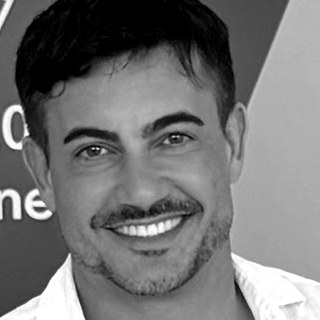 Claudiu · Human2OS
Learn AI. Make it useful. Build something real.
AI does the fast part: it drafts, sorts and summarises. A person checks the work and makes the final call. Nothing important goes out until a human says yes. That is how we teach AI, and how we build with it.

Practical AI skills for everyday tasks: write, research and plan faster, and catch what AI gets wrong.
Find the repetitive work worth handing to AI, and set it up so a person stays in charge.
Learn how practical AI skills can become a service, and how to deliver it responsibly.
Not hype, not a tool list. The habits that turn AI from a chat window into useful work.

This is how every workflow we design behaves. A request arrives, the AI prepares a reply, and nothing leaves until a person decides. Nothing here is sent anywhere.
The same method whether you're improving your own work, a business process, or a service you deliver to clients.
Pick a real problem and decide whether AI is the right answer. Sometimes it isn't.
Map the steps, the data, the risks and where a person decides.
Create the smallest version that does something useful.
Test accuracy, failures and approvals before anyone relies on it.
Use it in your work, your business, or as a service for others.
AI sorts incoming requests and drafts answers. You approve, edit or discard.
Before: read, search, write every answer. After: check a ready draft.
AI tracks who's waiting and prepares the follow-up. You decide who gets it and when.
Before: follow-ups live in your head. After: a daily list, drafts included.
AI turns notes and documents into summaries. You check the facts and sign off.
Before: notes everywhere. After: one summary, checked by you.
A free weekly newsletter that teaches, not a news recap. Each edition solves one real problem, step by step, with the human review and data checks built in.
Weekly. Unsubscribe any time.
For individuals, small businesses and future service providers who'd rather not figure it all out alone.
15 minutes. One problem. A clear next step. We check whether AI can help and which option fits you.
Book a free call on Stan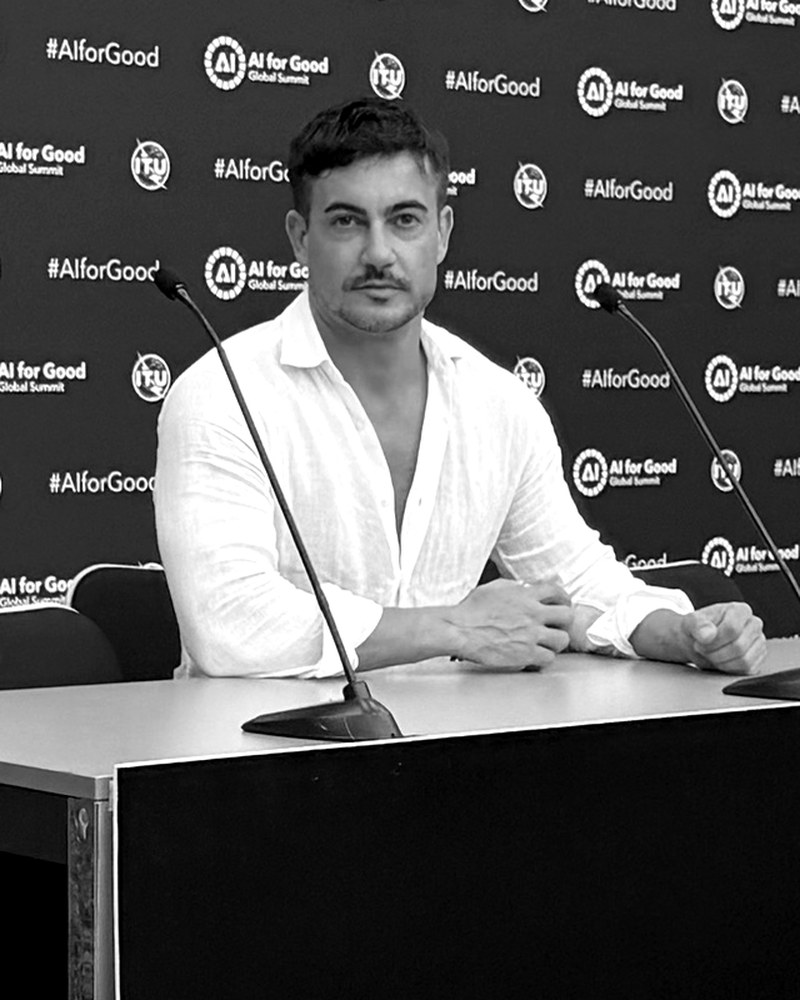
Need it built? Implementation is quoted in writing after a session, with software costs listed separately. Larger builds are delivered with vetted developer partners, and the proposal says who does what and how everyone is paid.
Describe one task you repeat. Choose a written suggestion with no call, or request a Clarity Session. A person reads every request.
The written suggestion is short and practical, not a free technical specification.

Every engagement answers these questions in writing. No blanket promises, just how the work is actually done.
I've spent my career in the room between two groups: the people who run a business and the people who build its technology. I translate what one needs into what the other can ship.
Human2OS does the same for AI. At the AI for Good Global Summit in Geneva, the question that stayed with me was how to use AI without handing over control. Everything here answers it the same way: AI drafts, people decide.
Studied business IT, law and business administration (master's, ASE Bucharest).
Field Notes, the 15-minute call and the written suggestion cost nothing.
One price for a defined scope, shown before you pay.
Scoped and quoted in writing. Third-party software costs listed separately. No hourly surprises.
Yes. Field Notes starts from the basics, and sessions start from where you are.
No. Most useful workflows start with tools you already use. If code is needed, it's handled for you or by a partner.
If you have a repetitive task with clear steps, probably. The free call tells us quickly.
Yes, through the AI service business track in Field Notes. It covers real delivery and economics, not shortcuts.
The 15-minute call is free. The Clarity Session has one fixed price, shown before you pay.
One defined problem, an honest view on AI's role, a suggested workflow, approval points, basic data risks and a short written plan.
Use it. The hard part is fitting AI to how your work actually runs, and deciding where a person must check. That's what we work on.
It will, sometimes. That's why outputs that matter are reviewed by a person before they're used or sent.
You, or the person you choose. Approval rules are agreed for each workflow.
They're named in your plan before anything starts, with their data settings checked.
Simple workflows, yes. Larger builds are delivered with vetted developer partners, quoted in writing.
No. You get a clear scope and honest advice. Results depend on your work and how the system is used.
We test before you rely on it. If it isn't working, we fix it or stop, as agreed in the scope.
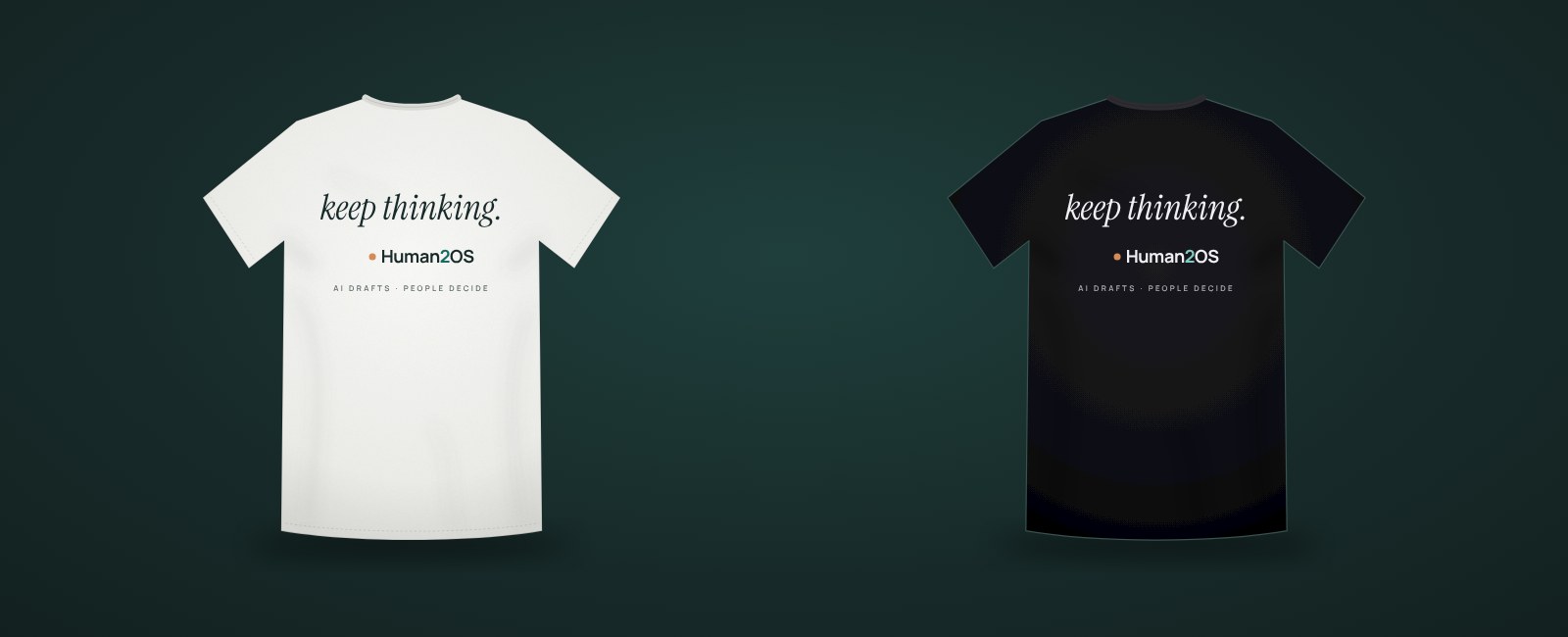
Every good engineering team knows it: nothing ships without a second pair of eyes. We think AI deserves the same rule. The "keep thinking." tee, in white and black, printed to order. Field Notes readers hear first.
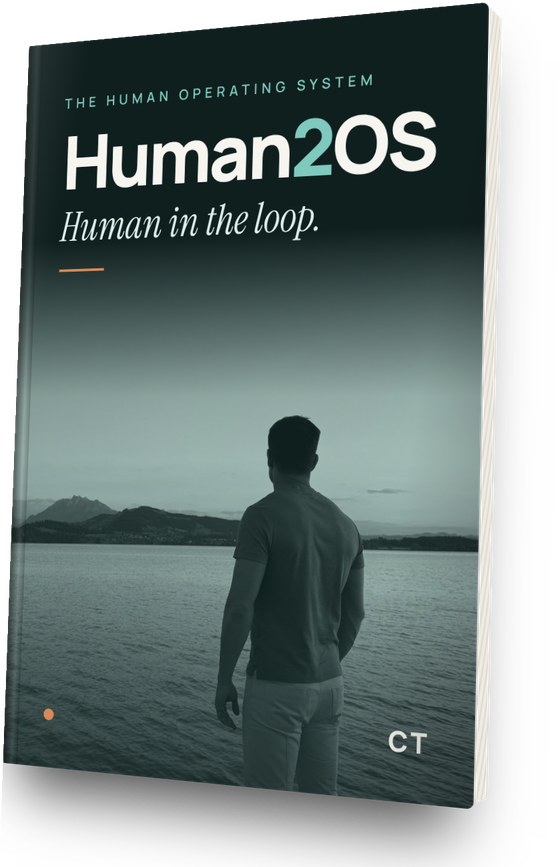
The human operating system for working with AI. Real stories, real mistakes, and a simple rule that keeps people in charge: AI drafts, people decide. In progress now.